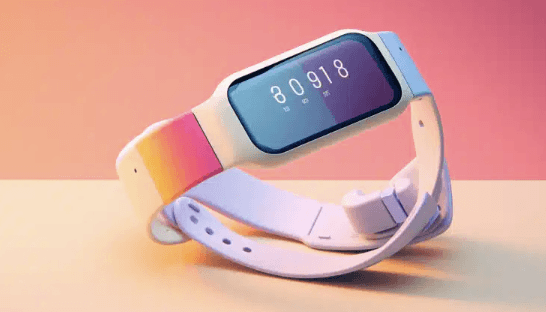
The future of personal devices sits at the edge of routine and anticipate. Wearables become everyday co-pilots, mediating tasks with adaptive interfaces and seamless delegation. Privacy-by-design and data sovereignty anchor resilient ecosystems, while modular platforms knit devices into a coherent, low-effort flow. As intelligence and autonomy grow, users gain control without friction, yet the exact balance between convenience and privacy remains unsettled. The next shift will hinge on how these partnerships evolve under constraints and trust.
The Context: How Personal Devices Evolve
The evolution of personal devices unfolds as a convergence of capability, connectivity, and context, where hardware miniaturization and software assimilation co-create increasingly intimate interfaces.
Contextual intelligence guides adaptive prompts and tasks, while energy autonomy sustains continuous operation.
Wearables interactions become muscle memory, data sovereignty grounds user control, and modular ecosystems enable seamless integration across platforms, shaping a liberated, anticipatory, and scalable technology landscape.
Privacy, Security, and Trust in a Highly Connected World
As personal devices become more deeply embedded in daily life, the governance of privacy, security, and trust emerges as a defining constraint on adoption and innovation, shaping both user expectations and platform design.
In a highly connected ecosystem, stakeholders anticipate resilient defenses and transparent controls, balancing privacy tradeoffs with usability, while data minimization becomes a core principle guiding scalable, freedom-minded experimentation.
From Wearables to Everyday Partners: Use Cases and Interactions
Could wearables evolve beyond sensors into everyday partners, seamlessly mediating tasks, decisions, and micro-interactions across contexts? They would leverage adaptive interfaces to anticipate needs, synchronize with environments, and reduce cognitive load, transforming routines into fluid choreography. Biometric authentication enhances trust, while privacy-preserving defaults empower users. These partners enable liberty through proactive assistance, coexisting with humans as subtle, intelligent extensions of daily life.
Designing for Personalization: AI, Control, and Privacy by Design
Privacy by design frames data handling as default.
Personalization ethics guides choices about recommendation boundaries, preventing manipulation while enabling meaningful, user-directed customization across devices.
Frequently Asked Questions
How Will Devices Balance Autonomy With Human Oversight?
Autonomy oversight will require layered device governance, where systems autonomously adapt while humans supervise critical thresholds. The balance emerges through transparent controls, modular autonomy, and evolving policies, enabling freedom-seeking users to influence decisions without surrendering safety or accountability.
What Standards Ensure Cross-Device Privacy by Default?
Cross-device standards establish privacy by default, privacy by default, cross-device standards. They guide design, governance, and enforcement, ensuring interoperable protections; they evolve with risk, user control, and transparency, aligning innovation with individual autonomy, consent, and freedom-loving, forward-looking expectations.
Will Personal Data Remain User-Owned or Become Vendor-Controlled?
Data ownership vs vendor control will tilt toward user sovereignty, as privacy by default standards empower individuals while vendors compete on transparent data practices; speculative trends favor freedom, interoperability, and robust consent, shaping a landscape where ownership rights endure alongside innovation.
How Will Devices Handle Consent Across Family and Shared Accounts?
Devices will implement consent negotiation mechanisms that adapt to evolving family dynamics, balancing privacy with shared needs, while clearly defining shared account boundaries to prevent inadvertent data exposure across members. This speculative trend supports freer digital autonomy.
See also: The Future of Patient-Centric Care
What Are the Long-Term Environmental Impacts of Ubiquitous Devices?
Long term environmental impacts suggest devices become more resource-efficient and modular, while societies pursue ambitious E waste reduction. The trend skews toward graceful obsolescence, optimistic recycling, and minimized material footprints, appealing to a freedom-seeking audience curious about sustainable futures.
Conclusion
In a world where devices whisper intentions and intentions whisper back, the line between tool and partner blurs. Privacy-by-design tightens its grip, yet personalization grows costlier to the cost of consent. Trust becomes a shared architecture, not a feature. Wearables migrate from sensors to co-pilots, reducing friction while expanding responsibility. The most intimate networks emerge not from surveillance, but from seamless delegation. The future favors platforms that anticipate, protect, and empower, yet remain quietly controllable by the user.