Across fashion education, a core set of foundational skills underpins viable careers: pattern, fit, fabric behavior, and technical execution. Hands-on courses translate theory into tangible objects, while studios sharpen craft through trials and fixes. Beyond technique, programs cultivate vision, storytelling, and brand craft, tying narrative to market needs. Internships and live briefs accelerate growth, yet questions linger: how do these elements harmonize into distinct creative trajectories that endure beyond the classroom? The next step may redefine what counts as preparation.
What Fashion Careers Require: Foundational Skills and Pathways
Career paths in fashion hinge on a core set of foundational skills, with each role demanding a blend of design sensibility, technical know-how, and practical execution. The inquiry examines style fundamentals and the trajectories they enable, from concept to presentation. A considered portfolio strategy maps competencies to opportunities, revealing how cross-disciplinary literacy shapes roles, collaboration, and adaptable problem-solving within evolving industry ecosystems.
Hands-On Courses That Build Craft and Practice
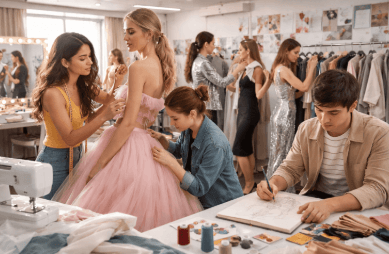
Hands-on courses form the backbone of craft and practice in fashion, translating theory into tactile competence. These offerings translate pattern study into real objects, revealing how geometry moves on fabric and fit responds to texture. Students debug seams, drape silhouettes, and test material behavior, cultivating disciplined curiosity. Fabric manipulation becomes a dialogue between intention and outcome, shaping confident, adaptable practitioners.
Programs for Vision, Storytelling, and Brand Craft
Across fashion education, emphasis shifts from making and testing to shaping ideas that others can see, feel, and invest in. Programs for vision, storytelling, and brand craft cultivate interpretive skills, guiding students to articulate concepts into cohesive narratives. They connect creative experiments with market language, reframing aesthetics as strategic assets, where vision informs storytelling and brand craft shapes consistent, compelling identities for diverse audiences.
Funding and Experiential Learning to Accelerate Your Career
Funding and experiential learning emerge as pivotal levers that can accelerate a fashion student’s trajectory from concept to market.
The discussion surveys funding models that unlock projects beyond tuition constraints, enabling risk-taking and experimentation.
It also maps experiential learning opportunities—internships, collaborations, and live briefs—that translate ideas into market-ready outcomes, enriching portfolios and professional credibility through deliberate, reflective practice.
See also: The Future of Personal Devices
Frequently Asked Questions
How Do I Choose a Fashion Course Aligned With My Career Goals?
The seeker evaluates options by mapping career goals to course alignment, inspecting portfolio demands, industry ties, and practical outcomes. Curiously analytical, the narrative follows how each program supports autonomy, mentors projects, and reinforces a自由 mindset toward creative career pathways.
What Balance of Theory vs. Practice Should I Seek?
Balancing theory versus practice, the answer lies in a subtle equilibrium: theory informs intent while practice tests it; balancing concepts, designers weigh scholarly rigor against hands-on exploration, pursuing curious, analytical patterns that honor freedom and tangible Creative Careers.
Are Online Programs as Effective as In-Person Fashion Courses?
Online programs can match impact with disciplined practice; however, outcomes hinge on structure. The analysis weighs online platforms against in person immersion, highlighting flexibility, mentorship access, and immersive projects as pivotal factors shaping creative career freedom.
How Can I Measure the Return on Investment From Fashion Education?
Calculating ROI from fashion education entails tracking career milestones and ROI benchmarks across income, roles, and influence; a curious, analytical narrative emerges as institutions and alumni compare tuition costs, time-to-promotions, and portfolio-driven earnings against industry evolution.
Which Courses Help Develop Networking and Industry Visibility?
Could one imagine growth through targeted courses? They note that programs emphasizing networking events and industry forums cultivate visibility, enabling strategic connections, collaborative projects, and reputational momentum across fashion spheres, shaping autonomous careers rather than passive credential chasing.
Conclusion
Fashion careers emerge where foundational skills meet deliberate practice and storytelling. By blending hands-on craft with brand-building and experiential learning, students translate concepts into market-ready narratives. A case study: a graduate refines drape and fit through pattern work, then leverages a live brief to shape a collection narrative that resonates with a sponsor’s audience, securing internship traction and a first-line portfolio. The trajectory shows that curiosity, reflection, and cross-disciplinary collaboration transform skills into creative, career-ready momentum.